





Cloud businesses rarely run into trouble because of infrastructure. The real challenge usually appears one layer above, where usage needs to be translated into something billable, explainable, and repeatable.
This is exactly the space where Cloud Billing For WHMCS has been operating for years as a necessary bridge between infrastructure data and financial logic. Over time, it has grown into a trusted enterprise-grade solution known for turning usage into accurate, transparent billing that reflects real consumption.
Version 1.4.5 doesn’t change that role, but pushes it further, making the module relevant in places it didn’t quite reach before.
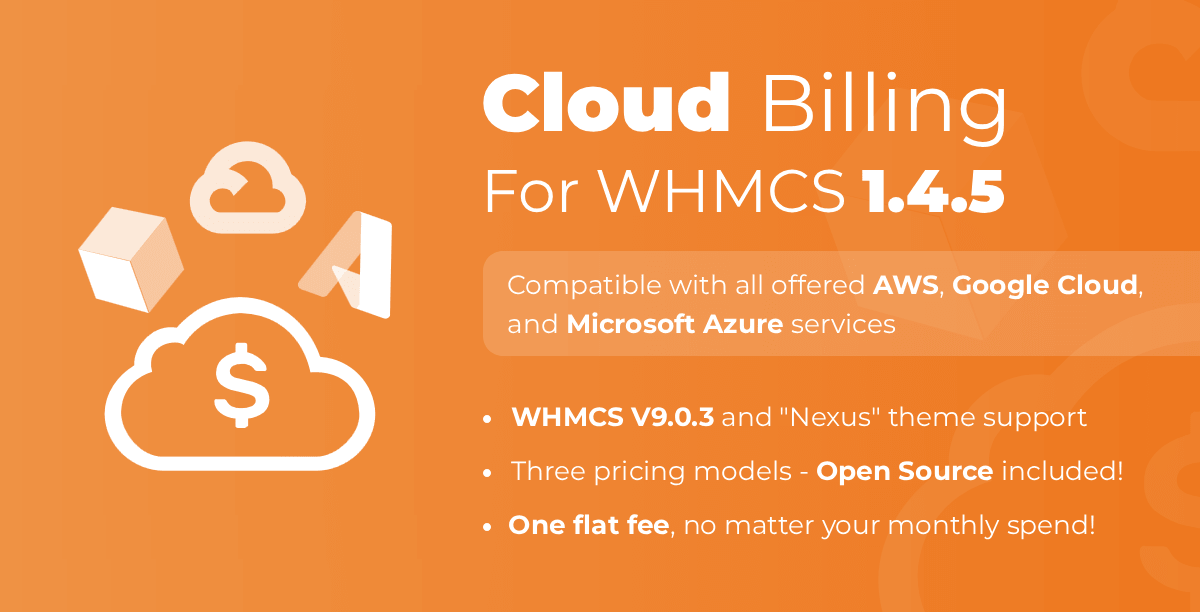
Turning Cloud Usage Into Numbers You Can Trust
Anyone who has worked with public cloud platforms long enough knows that usage data is not designed with invoicing in mind. It is detailed, fragmented, and often difficult to map directly to customer billing.
What Cloud Billing For WHMCS does is bring structure to that raw data. It gathers usage across the following hyperscale cloud providers:
From there, the data is processed and structured for use within WHMCS in a way that allows for accurate, usage-based billing without constant manual adjustments.
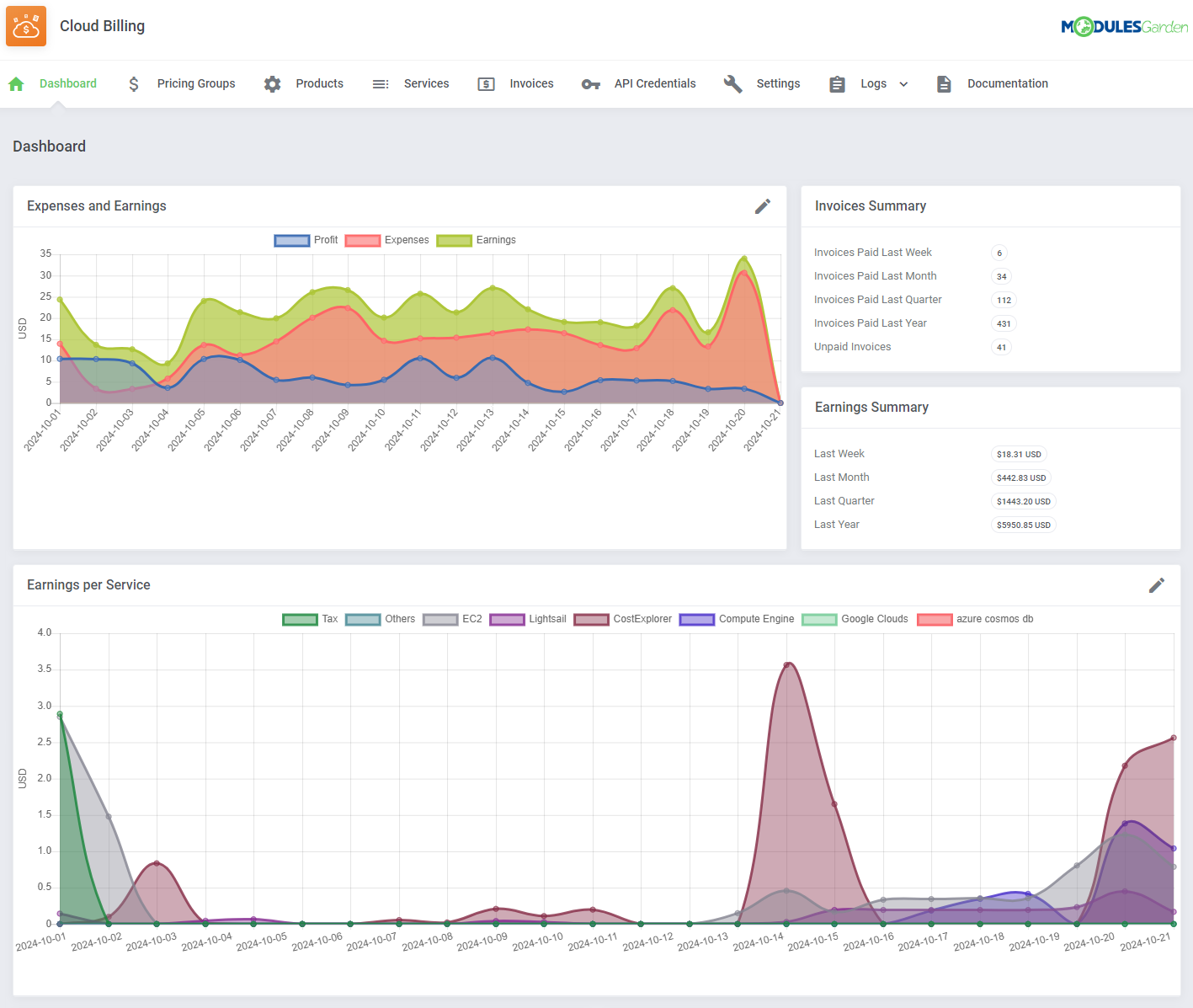
The practical impact goes beyond clean calculations. It lets you connect multiple cloud services with a single WHMCS product, define pricing groups, and apply custom billing margins to specific services. Billing can be handled automatically on a schedule that fits your workflow, while both you and your clients get access to clear, visual breakdowns of usage, costs, and expected charges. Instead of putting it all together manually, the whole process becomes easier to follow on both sides.
Breaking Past Original Boundaries
Cloud Billing For WHMCS 1.4.5 marks a clear step forward in how the module fits into modern WHMCS environments. The update brings a set of changes that make it easier to adopt, easier to maintain, and a far stronger match for real-world cloud operations.
- Full support for WHMCS 9.0.3 removes a practical blocker for teams keeping their systems up to date, allowing the module to stay in sync with the rest of the environment.
- A revised licensing model introduces more flexibility in how the module can be used and maintained. Instead of a single monthly approach, it is now offered as a Monthly and Annual License, and even an Open Source version available through a one-time payment. This makes it much easier to match the tool with your own billing strategy, not the other way around.
- A flat fee structure replaces the earlier tier-based model. This simplifies cost planning, especially in environments where cloud usage itself is inherently variable. The billing tool no longer needs to be factored in every time something else changes.
Catching Up With Real-World Cloud
Cloud Billing For WHMCS has reached a point where it plays a central role in keeping cloud operations and billing aligned. It sits between dynamic infrastructure and structured financial processes, making sure that usage, pricing, and invoicing stay consistent as the business evolves.
With the latest update, the module finally catches up with how companies operate behind the scenes – across multiple providers, with evolving pricing models, and with a growing need for consistency on the billing side.
If you want to keep exploring the module – from the full feature set to the complete changelog and everything we’ve packed into each pricing model – you’ll find it all on our website.
Cloud Billing For WHMCS 1.4.5 - Built for the realities of modern cloud,

